Building a $23,000 Monthly Micro-SaaS
DevBlog
Jun 3, 2026 · 2 min read · 96 views
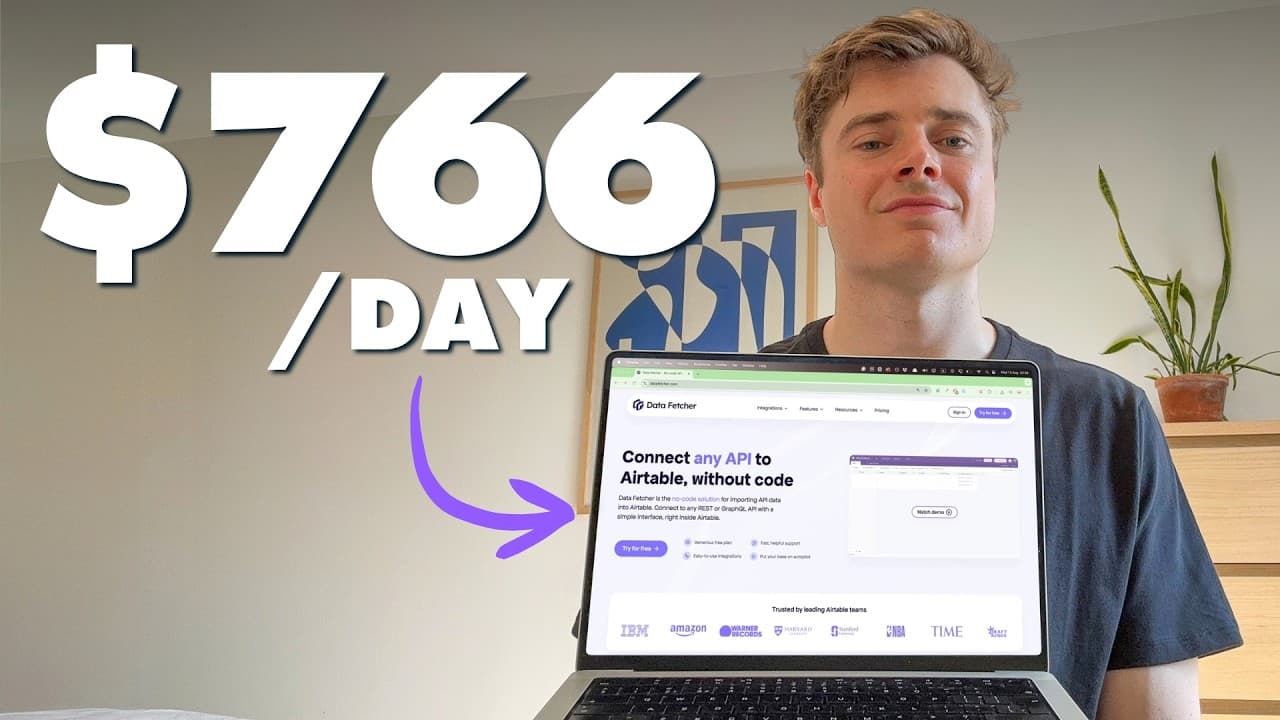
Andy Cloak's journey to building a $23,000/month micro-SaaS as a solo founder started with him pivoting away from his university engineering studies to teach himself how to code. While working as a freelance React developer in London, he tried launching several side projects that initially failed to gain traction.
His first real success was a TikTok influencer directory built by scraping data, which he grew to a few thousand dollars a month and eventually sold. This sale gave him a few months of financial runway to figure out his next move. While attempting to build an IPO newsletter, he found himself constantly pulling financial data into Airtable, which planted the seed for his winning idea.
Noticing the massive success of a Google Sheets add-on called "API connector," Andy recognized an opportunity to build a similar tool for Airtable, a platform that was growing rapidly and had just launched its own extension marketplace. He created Data Fetcher, an extension that allows users to connect Airtable to external APIs to automate data imports. By being an early builder on the Airtable marketplace, he secured a steady stream of qualified leads and gained his first customer within days. Today, the business has 600 paying customers, generates $23,000 a month in recurring revenue, and operates at an impressive 85% profit margin.
Two particularly interesting details from his story are his approaches to focus and user feedback:
Using AI as a Co-founder: To combat "shiny object syndrome" and the temptation to start new projects when growth slows, Andy literally uses the AI Claude as a business coach. He prompts Claude to talk him out of new ideas and force him to focus on the business that is currently working.
The Cost of Ignoring Users: He admits to making a major mistake by wasting almost an entire year without speaking to his users. When he finally conducted user testing, he discovered UX issues in a single afternoon that, once fixed, increased his revenue and usage almost overnight.
Regarding an "interesting tech blog": The provided sources do not mention a specific external tech blog by name. However, they do note that Andy's primary growth strategy was writing his own tech and content marketing blogs. Once he identified the most common APIs his users were connecting to, he wrote highly targeted blog posts and created YouTube videos centered around those use cases, which successfully drove his business to its first $3,000 in monthly revenue.
If you are interested in the actual technology he used to build his app, his tech stack is heavily JavaScript-based. He uses TypeScript, React, Next.js, and Tailwind for the front end, powered by a Node, Postgres, and GraphQL backend. To keep his hosting costs exceptionally lean, he utilizes Heroku and Hetzner