Google DeepMind: Shaping the Future of AI Research
DevBlog
Aug 1, 2026 · 3 min read · 9 views
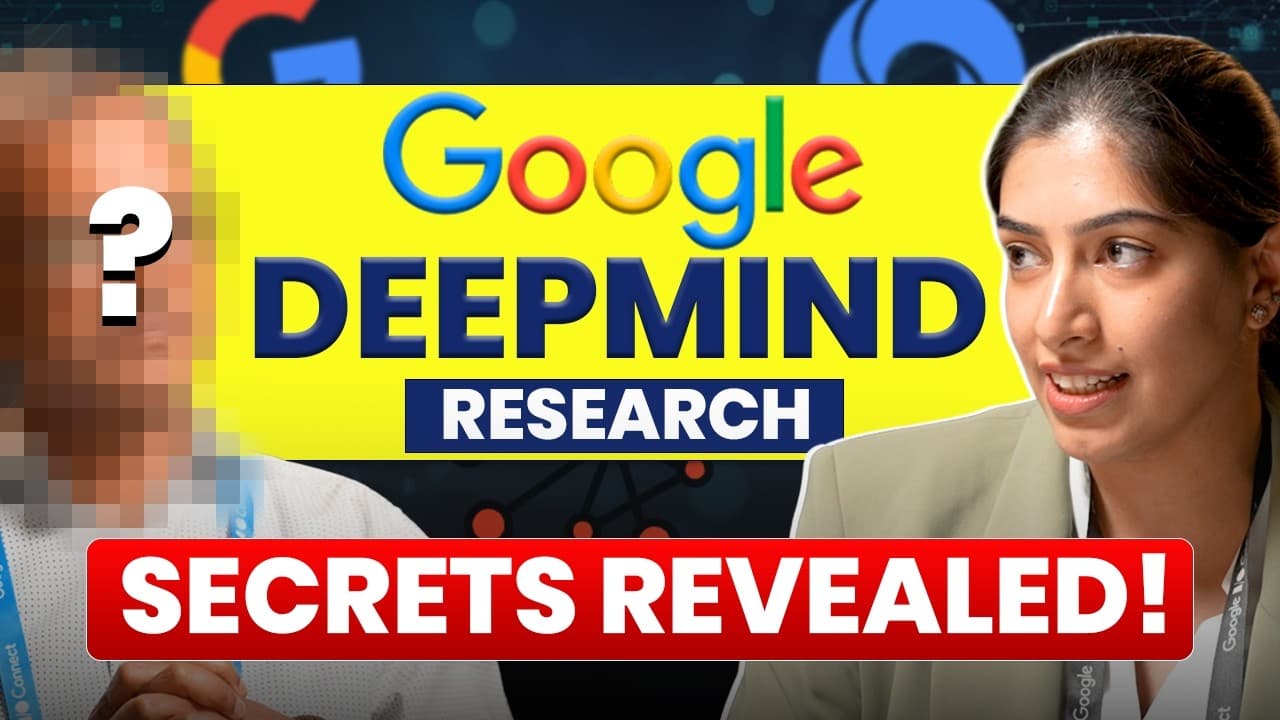
The AI Revolution: How Google DeepMind is Shaping the Future of Research
Artificial Intelligence has been the buzzword of the decade, but few entities have shaped its trajectory as profoundly as Google DeepMind. With Dr. Manish Gupta's insights, we delve into how DeepMind is revolutionizing research productivity and pushing the boundaries of AI capabilities.

Behind the Scenes: The Evolution of AI at Google DeepMind
From its inception, Google DeepMind has been at the cutting edge of AI research. The organization has evolved from developing fundamental machine learning algorithms to pioneering sophisticated models like Gemini, which are designed to tackle complex tasks across various cultures and languages.

Breaking Down the Gemini Models: AI's New Frontier
The Gemini models represent a leap forward in AI research tools at DeepMind. These models are not just about processing data; they're about understanding and reasoning. However, a significant challenge remains: uneven reasoning capabilities. Gemini models can solve complex problems but often stumble with simpler ones. This is where DeepMind's focus on reinforcement learning and hardware-software co-design becomes critical.

# Example of a reinforcement learning algorithm
import gym
import numpy as np
env = gym.make('CartPole-v0')
observation = env.reset()
for _ in range(1000):
    env.render()
    action = env.action_space.sample()  # Random action
    observation, reward, done, info = env.step(action)
    if done:
        observation = env.reset()
env.close()
Key Use Cases: Transforming Research Productivity with AI
Google DeepMind's AI tools are transforming how research is conducted. The AI co-scientist tool, for example, decomposes research problems into sub-problems, enabling parallel exploration. This not only accelerates hypothesis testing but also significantly enhances research productivity.
- Developing multilingual and multimodal models for global applications.
- Utilizing synthetic data creatively to augment real-world datasets and improve model training.
The Competitive Landscape: Google DeepMind vs. Other AI Giants
In the fierce competition of AI research, Google DeepMind stands alongside other titans like OpenAI, IBM Watson, and Microsoft Research. Each entity brings unique strengths to the table, from natural language processing to computer vision. However, DeepMind's full-stack approach—integrating hardware, models, and products—sets it apart in terms of efficiency and scalability.
Future Prospects: What’s Next for AI Research and Development?
The future of AI at Google DeepMind is promising, with ongoing improvements to the Gemini models and the introduction of innovative tools like the AI co-scientist. By continuing to recruit and train new talent, DeepMind is ensuring the next generation of AI researchers is well-equipped to tackle future challenges.
Conclusion: The Impact of AI on the Tech Industry and Beyond
Google DeepMind's advancements are not just milestones for AI technology; they're reshaping the tech industry and beyond. By enhancing research productivity and pushing the boundaries of AI capabilities, DeepMind is setting a new standard for what AI can achieve. As the technology continues to evolve, its impact on industries from healthcare to autonomous systems will only grow.