The Solo Dev’s Guide to Launching a Profitable SaaS Without Quitting Your 9-to-5
DevBlog
Apr 6, 2026 · 4 min read · 194 views

If you are a software engineer working a traditional 9-to-5 at a tech company, you have probably felt the entrepreneurial itch to build your own software and generate your own income. Transitioning from a large engineering team to a solo developer trying to market and monetize a product is a completely different ballgame.
Before you write your first line of code, you need to set your expectations: this journey is a marathon, not a sprint. It is highly likely that your first few apps will completely flop. It often takes five or six attempts before building an app that generates any modest revenue video.
Here is a step-by-step guide to finding an idea, shipping it fast, and tackling the hardest part of all—marketing.
Phase 1: Finding the "Right" Idea (Hint: Don't Reinvent the Wheel)
Many talented engineers fail because their egos push them to build ultra-complex, niche B2B products. If your goal is simply to get traction and make your first couple hundred dollars on the internet, let go of the need to build a venture-backed unicorn.
Instead, lean into these validation strategies:
Blatantly copy existing apps: Rebuild tools you already use daily—like a budgeting app, a calorie tracker, or a screenshot tool—and add a slight twist or a better UI. Copying is a highly effective way to make your first internet dollars. For example, one developer built an AI meeting recorder called "Monty" that was essentially a copy of existing tools; it peaked at around $1,900 in monthly revenue and still passively makes $650 a month today.
Scroll social media intentionally: Pay close attention to the apps being advertised to you on TikTok, Instagram, or YouTube Shorts. If you see competitors running ads for an app, consider that a green flag; it proves there is a validated market full of paying customers.
Phase 2: The Build (Speed > Perfection)
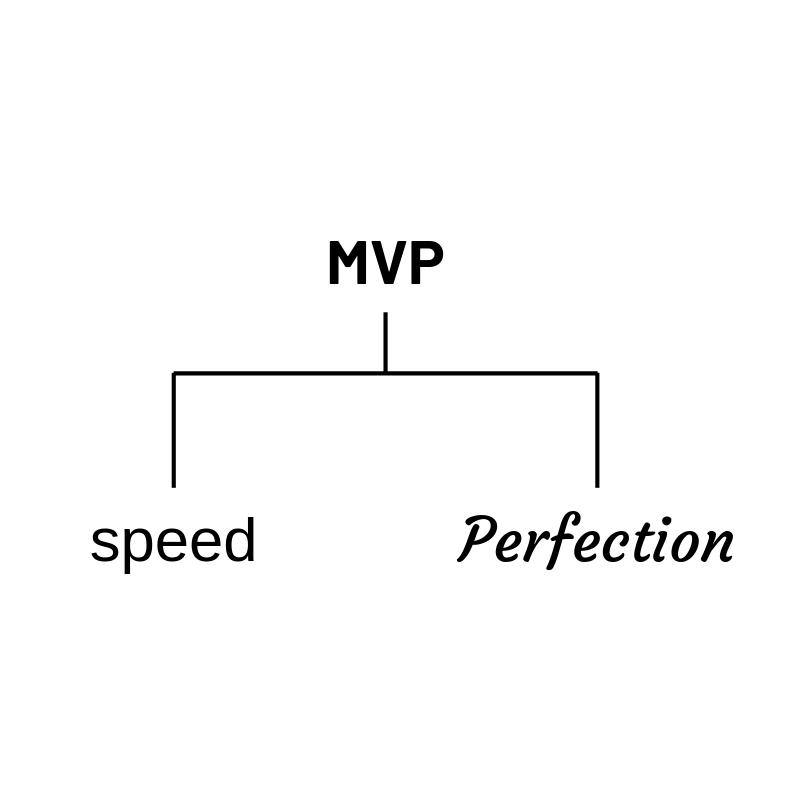
When you are building your own micro-SaaS, your biggest advantage is speed. Perfection is the enemy of progress, a lesson that is especially hard for big tech engineers to accept.
Pick a fast stack: Do not obsess over learning the newest, sexiest tech frameworks unless they allow you to move faster. Pairing a frontend framework like Next.js or Tanstack Start with Supabase for your database and authentication is a highly recommended stack for rapid development.
Pay for managed infrastructure: Do not waste time self-hosting your app on a $10 VPS just to save a few dollars. Use managed providers like Vercel and Supabase to handle the infrastructure. Your priority should strictly be building and marketing the product, not managing Docker containers.
Skip the unit tests: If your app currently has zero users, do not waste time writing complex unit tests, setting up end-to-end testing, or managing separate staging environments. Build an app that is just "good enough" to ship so you can get user validation.
Scale only when necessary: You only need to worry about heavy infrastructure when you hit real scaling bottlenecks. For example, if your app scales past 25,000 users and you start hitting LLM rate limits, you can then integrate managed inference platforms like Crusoe to host powerful open-source models (like Nvidia's Nemotron 3).
Phase 3: The Hardest Part—Marketing
Marketing is notoriously the most difficult phase for solo developers. Treat it exactly like learning a new programming language: the beginning is brutal, but you get better with reps.
Avoid getting stuck in "tutorial hell." The only way to learn marketing is by actually launching campaigns. While LLMs are great for coding, they are less useful for bleeding-edge marketing tactics, which evolve incredibly fast. As a solo founder, you must balance being the "sword" (your coding strength) and the "shield" (your marketing weakness).
The golden rule of marketing is to pick one channel and obsess over it.
Cold Outreach: If you are building a B2B product, cold outreach via email to targeted stakeholders is arguably your best bet, even though it is difficult to scale.
Organic Social Media: If you are building a B2C product, short-form video is highly recommended. It is essentially free and offers the fastest validation because virality is democratized. (There are even tools out there, like Yorby, designed specifically to help founders remix viral marketing formats for their own apps).
SEO / LLM Optimization: Ranking in search engines or AI chat responses is a phenomenal source of free traffic, but be prepared to wait weeks or months to see any validation.
Paid Ads: Ads provide instantaneous feedback on whether users want your app, but they are incredibly expensive and require thousands of dollars to fine-tune your targeting.
Rinse and Repeat
Ultimately, finding a profitable SaaS idea is a loop: you build an app, market it, validate it, and evaluate the results. Most of the time, the app will fail. When it does, you take your learnings, spin up a new project, and start the cycle over again until you build something that actually sticks. Stick with it, put in the reps, and you can absolutely build a profitable business without giving up your 9-to-5.